Monday, 3 May 2010

Participating in Rachel's art

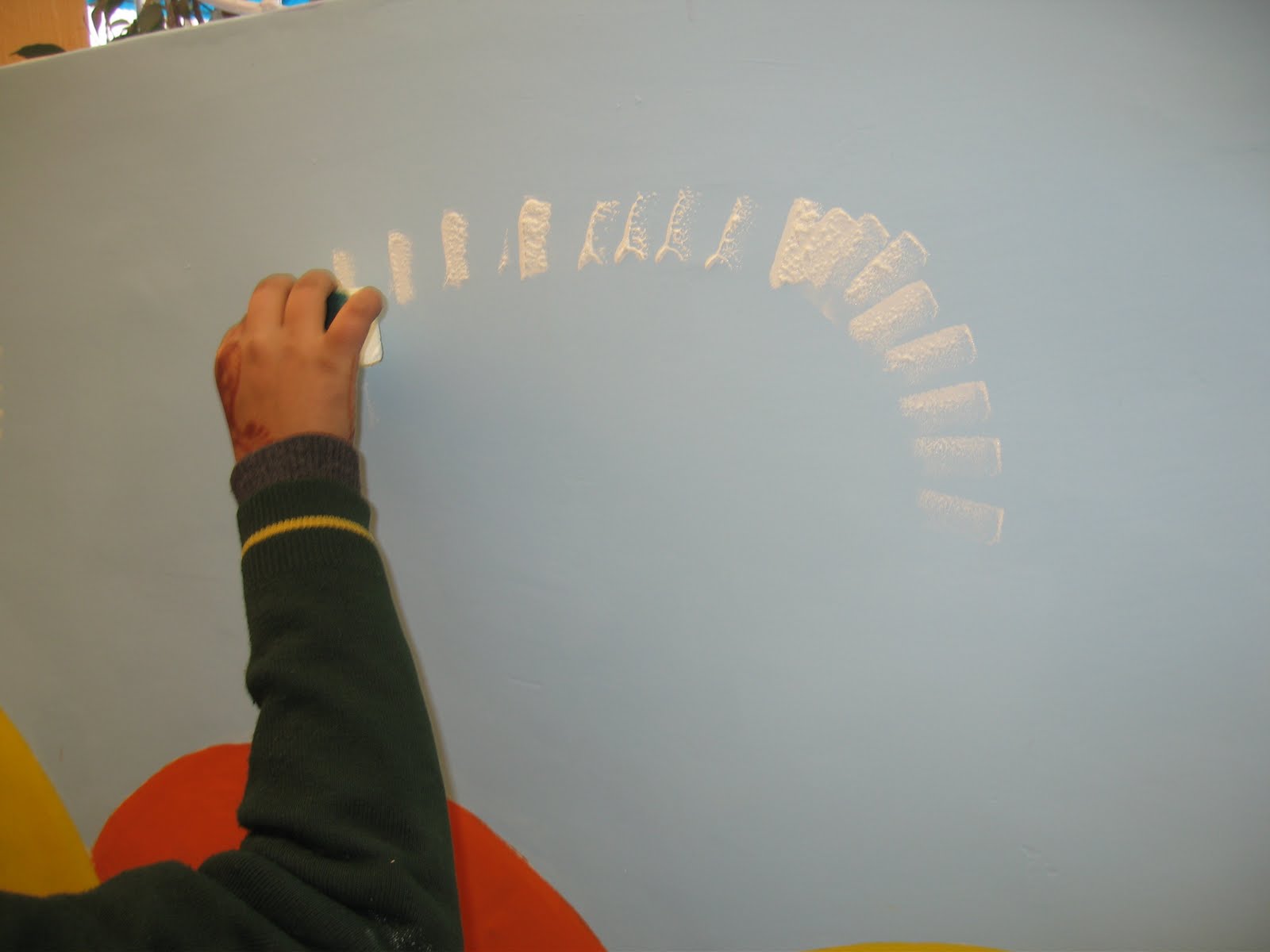
As I continue my journey into the world of participatory art, I have been thinking about my own participation in Rachel's art and with Poppy, her giant snowball which is made out of bubblewrap and sellotape.


All of the above images have been authorised to use by Rachel.


After our mind boggling web design lecture, me and Rachel decided to go and have some fun and take Poppy out on an adventure and create some art.

During this process, I actively participated in Rachel's art by contributing to the experimental process, allowing my friend to explore with and try out various compositions and different ideas. 

In particular, I really enjoyed just observing the way in which people at uni especially interacted with Rachel's ball in curious and incquisitive ways. No one was reluctant to participate, and those who did seemed to show a genuine interest in it, and how 'unusual' and in someways how 'deliberate' it was.

It was great just to take an active role in being a part of this experience, and helping Rachel with her art. Thank you Rachel for letting me participate.   :-) 

Sunday, 2 May 2010

Responses to the word 'IDENTITY'

Having given a fair few packs of materials out to my friends, family, and people I know, I have began to recieve their responses to the task of creating a response to the word 'IDENTITY'. They could use any of the materials contained within the packs that I provided, in addition to any of their own choosing.

All of the responses that I have recieved so far are brilliant, and very different from one another!

They really reflect the diversity that is apparent within us as individual human beings, our thought processes, and the diverse ways in which we percieve, engage, and interact with the world around us.

So a massive thank you to all those who have participated so far. Keep them coming in! :-)

Here are a few that I would like to share with you:


 'Me' created by using the provided record card in addition to a single hair and sellotape

 Stating personal details and philosophies on life

Using the record card to print on a fingerprint - something that is individual and cannot be replicated


 A pictorial representation of themselves in addition to their address which is written on the luggage tag on the reverse side

 A fractured image representing one particular section of an identity. By putting all of these pieces together, a full picture of the person can be obtained, and therefore their identity can be accessed.

A liberating perception on the word 'identity'.


A holistic perception on identity. Nevertheless, the participant has identified a toe-tag representing our identities when we leave the living world. Upon speaking to the participant she also said that the 'dash' on a grave stone in between the date of birth and the date of death represents our whole life and everything this contained.

Identity is not only who a person is, but also why they are and what contributions they make to the identities of others as a result of the actions that a person takes.

Identity being defined and represented by an individuals current context

No one of these responses is the same, even though the content of some of the responses represent similar ideas and thoughts. This is what I truly find to be inspirational. The fact that we are all different, and interpret and respond to everyday life with a variety of attitudes/perceptions/views.    

Barnes (2002, p.8) identifies that,

"Art can help them [children] to perceive the world in a greatly extended way so that they can begin to assimilate a variety of perceptions in relation to one another.”

I believe that this is the case for everybody. By gaining an insight into the perceptions of others through the notion of participatory art, we can begin to construct, interpret, access, and share the way in which we understand, identify, and present ourselves within our social and cultural contexts.

The next step I think is for me to get more of my packs out there into the public domain. I could never anticipate what participants may create in response to the word 'Identity', as the experience of participatory art is completely individual and underpins so much of human interaction.

For example, many forms of art require some sort of participation. E.g. experiencing art is a kind of participation as we may observe, listen, watch, or respond in some way other way to what we see or experience. It could be said that art objects have been very rarely created not to be experienced by someone.  

By placing more of my packs into the public domain will hopefully allow me to gain a much wider perspective on the theme that I would like participants to respond to, in addition to actually encouraging more people to participate and make a contribution to this concept.  

Roux (2007, p.2) explains,

"In participative art, participation is the project and the artist creates the framework allowing for participation with no pre-concieved ideas of the outcome."

References:

Barnes, R. (2002) Teaching Art to Young Children 4-9. Oxon: RoutledgeFalmer.

Roux, X. (2007) Participation in Contemporary Art. New York: Redseeds.
Monday, 19 April 2010

The Morrinho Project at the Venice Biennale


Images taken from:

I also came across this finding during my tutorial with Hannah, it's absolutely brilliant!

In 1998, children from shantytowns on the hills of Rio de Janerio built up and created a minature reproduction of their favela (shantytown). The model has been created by using bricks and other materials which have been left over from building their own homes. The model covers quite a large area, approximately 300 square metres. The children have re-created scenes of everyday life within their favela, such as dance events to confrontations between rival gangs. This has been achieved by inhabiting the model with various toys such as plastic cars, various minature figurines etc.

The model of the favela was originally mistaken for a war plan because it is so accurate. Nonetheless, since 2001, the brick favela has travelled all over the world and gained recognition as a result of a documentaty that was created about it by filmaker Fabio Gaviao. One of the lastest places that a part of the brick favela has resided in is at the prestigious Venice Biennale, which is a major contemporary art exhibition that takes place once every two years in Venice.  

This goes to show that the children who created the model of their favela within a context where they were perhaps 'playing', has been interpreted, recognised, and appreciated as art. The product created by the children has also made an impact and contributed to the social and economical development of the region and indeed the surronding area in which the model was orginally created. For example, bringing money into the area through guided tours of the model, and other television/community projects.

I really like this piece of work. In particular, I especially admire the fact that the children were creating and participating in art without even realising it, and creating something that was meaningful and relevant to their lives, environment, and context.

Sunday, 18 April 2010

A whole school mural project - Participatory art

For my 3rd teaching practice, I was fortunate enough to be able to complete this within an international context at a school in Punjab, India.

The headteacher of the school was keen to draw upon my experiences from my pedagogy, particularly with regards to art education and using this as a catalyst to create a much needed change within the school's current dictatory curriculum and approaches to rote teaching and learning.

In response to this proposal, I planned, managed, and evaluated a mural project which involved the whole school community, allowing all to participate. In this sense, art was used as a facilitator to engage a community to enable and advocate change.


The process of the creating the mural allowed teachers to come to understand that children were able to learn much more meaningfully when this was placed into a context that was relevant to the diversity of the children's learning needs.

As a community, the school recognised the impact that the mural project had had upon raising levels of excellence and enjoyment within and across the school's curriculum. When conducting the mural project, opportunities to link together subjects and areas of learning were fully embraced. For example, children learned about life cycles of caterpillars and how they eventually develop into butterfiles (linking science to the mural project). Through the project, the children were also provided with opportunities to build upon skills as they help learners to improve their learning and performance in education, work and life. Speaking and listening skills were developed, as well as skills that allowed the children to work with others and problem solve. Children and teachers were also able to further develop their skills within curriculum areas. For example, the mural required us to mix paint in order to get a desired colour. In this situation, the children and the teachers were supported and encouraged to explore, experiment, and make discoveries in relation to colour mixing, and then use the knowledge and understanding gained from this and actively apply this to their mural project. 

The mural project also allowed the school's teaching staff to evaluate the way in which they teach the curriculum. Towards the end of my placement, the teachers began to plan for teaching and learning that would engage the children in a variety of ways, making the curriculum for meaningful, and therefore providing children with more ownership of their learning and development. Here are some photos of the work which was started by teachers and children across the school in relation to achieving this vision:


Road Safety. Raising awareness of safety as the school is situated on a busy main road. (Created by two teachers and three 8 year old pupils from the school).


Transforming the schools stage and performance areas. Linking learning to and celebrating India's musical and cultural heritage. (Created by three 11 year old pupils from the school).  

To see a process of change beginning was extremely inspiring and rewarding. From my perspective as a student teacher, recognsing the impact of my support and guidance, to the commitment and hard work of school community & their actions which resulted in an outcome and indeed an ongoing process which has facilitated a change in school development. Such an amazing experience to be a part of!  

Philosophies behind participatory art...

Following my art tutorial with Hannah last week, I have done some more research and exploration into participatory art. I have researched the philosophy behind the art, and I have come to learn that participatory art can be categorised into three categories.

1) Artist led

Involving participants in the art making process, where the artist creates a response to the work that has been created by the participants. For example, refer to my earlier post - 'The Art of Participation 1950-Now'. Within this type of participatory art there are certain ethical issues to take into consideration. For example, who does the work belong to? The participants, the artist or both? Also, does the artists intention potentially dictate and control the response of the participants, or does it provide scope for flexibility and the freedom of expression and opportunity? 

This is a photograph of the  pack of materials that I am currently distributing. My aim is to encourage participation in response to the word 'identity'. The pack does contain some guidance on the proposed task. However, participants do have the opportunity to interpret the task (in terms of materials) and indeed the word 'identity' in which ever way they wish to.     


2) Engaging communities to facilitate art (art as an enabler to advocate change)

Using art as a vehicle to: change perceptions and 'open eyes' to explore and address a particular concept, theme/issue, allowing communities to take ownership of the art they produce, and recognise and appreciate the art which is made is as credible as those pieces which have been created and exhibited by contemporary artists. For example projects involving organisations such as Friction Arts. On their website they state:

"Friction Arts have been making ‘art where you live’ for over 16 years. Friction listen to people, work with them and then translate their thoughts and ideas into high quality contemporary artworks which communicate to the wider world whilst remaining true to the voices of the people they originate with. These artworks may be performances, installations, interventions, publications or whatever is appropriate to the context of the project Friction firmly believe in the transformative nature of the arts, with communities and individuals, and are committed to expanding the reach of the arts into places they have not been before.

Friction have a unique ability to engage with people, particularly those who may not have engaged with the arts before and are able to immerse themselves in a situation, in order to take those they work with on a challenging journey. We are driven by our ethics and our belief in social justice, real equality and that by working together we can all have a better quality of life, whatever our material circumstances."

The following images have also been taken from the Friction Arts website. They relate to the '1 mile squared project'. Citizens of Johannesburg in South Africa were involved in creating, developing, and exhibiting an art project which ‘mapped’ and celebrated the city's cultural, aesthetic, and bio-diversity.


3) Art that is interactive

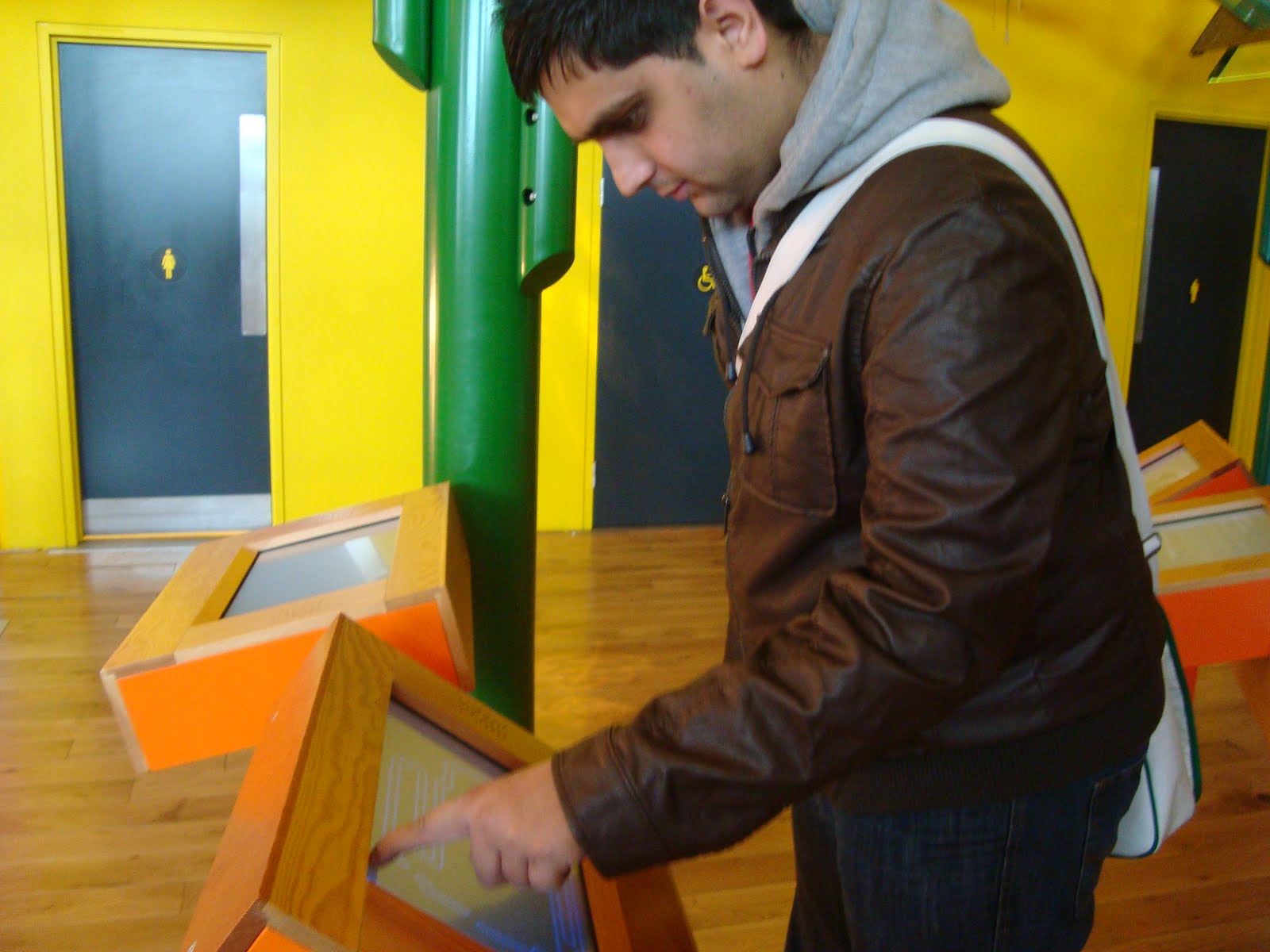
For example, The Public. Visitors are able to actually activate the art itself within a range of different contexts. Art can be created as a result of the advancements in technology. Everywhere you go within the gallery, there is something for visitors to participate and interact with. 


 The next two photographs were taken from mine and Rachel's favoutie exhibit within the gallery. As a result of the developed technology, we were able to create a life size performance/animation. One person selects a prop from the table, and the other person waits in front of the screen waiting for the chosen prop to appear and strikes a pose with it. We had so much fun! It's such a great and innovative way of getting visitors to participate within the art in which they can see the outcomes that they have produced instantly.


The gallery truly is a place where visitors of all ages can interact with and engage with art by exploring, creating, investigating, and experimenting. These processes play a significant part when teaching art, and when providing children with opportunities to develop and grow as confident artists. The environment of The Public is definately one which can nurture creativity and imagination - core skills for any person to have across all fields and professions. Fisher (2004, p.8) explains, "To create is to generate something. Generating outputs such as ideas, experiments and innovations is a necessary part of creative effort."

References:

Fisher, R. (2004) Unlocking Creativity: Teaching across the Curriculum. London: David Fulton Publishers Ltd.

Thursday, 15 April 2010

Art Tutorial with Hannah

I had an art tutorial with Hannah today which was extremely valuable and really insightful into the world of participatory art.Thank you Hannah!   :-)

We discussed my progress so far, and Hannah has suggested some artists and pieces of research to follow up/explore which I aim to do over the next few days!

I heart art!

Here is a photo that I would like to share with you that was taken by Rachel whilst we were at The Public on Monday.


It makes me chuckle and reminds me of the funtimes and shennanigans that took place! All in the name of art obviously, and I really do as the picture suggests!