Tuesday, 13 April 2010

The Art of Participation 1950 - Now

Whilst doing some internet research, I have come across an example of participatory art that I would like to share with you.

The piece is a part of an exhibition called 'The Art of Participation 1950 - Now' and is located at the San Francisco Museum of Modern Art. The exhibition presents an overview of participatory art practice during the past six decades, exploring strategies and situations in which the public has taken a collaborative role in the art making process.

In particular, I came across this piece which I think is absolutely brilliant:
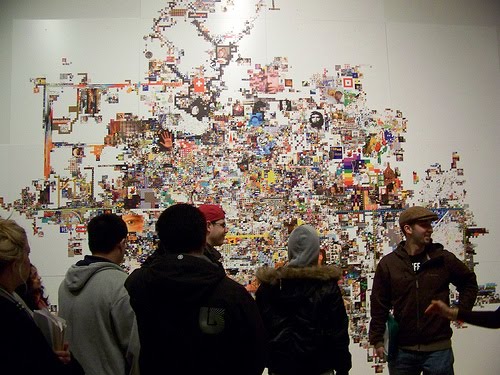

The piece is called 'Communimage - a moment in time VI' The piece has been developed by a range of multimedia artists and designers from across Europe, and in particular, Austria. 

Due to advances in technology, in particular the internet, new opportunities for communication and networking have been created. So with this in mind, the artists/designers wanted the internet to act as a tool in taking and applying a new meaning in 'shared authorship and collective production (communimage).

The artists/designers invited and encouraged the internet community to upload pictures onto a website. Contributions by those who participated range in varied subject matter. They include photorealistic images, animated images, to the intimate and the exhibitionist images!

When these images were put together, they created a large scale collective map, which represented the global internet community in relation to those who participated within the project. Almost 26.000 images were uploaded and used within the piece. 

The Austrian Cultural Forum on their website state that, "Viewed as a whole (one encounters it in the gallery as a large-scale print), communimage forms an abstract, polymorphous shape." So does this piece of participatory art reflect on the status of the image in the public realm and domain?

This has given me something else to think about within my practice & which follows on from yesterday's visit to The Public...intention and purpose of my art in relation to public realms/domains.

Monday, 12 April 2010

The Public - West Bromwich

Today me and Rachel ventured to The Public in West Bromwich. Despite some of the negative views that I had heard about it, I found the museum/gallery to be really inspiring and engaging.


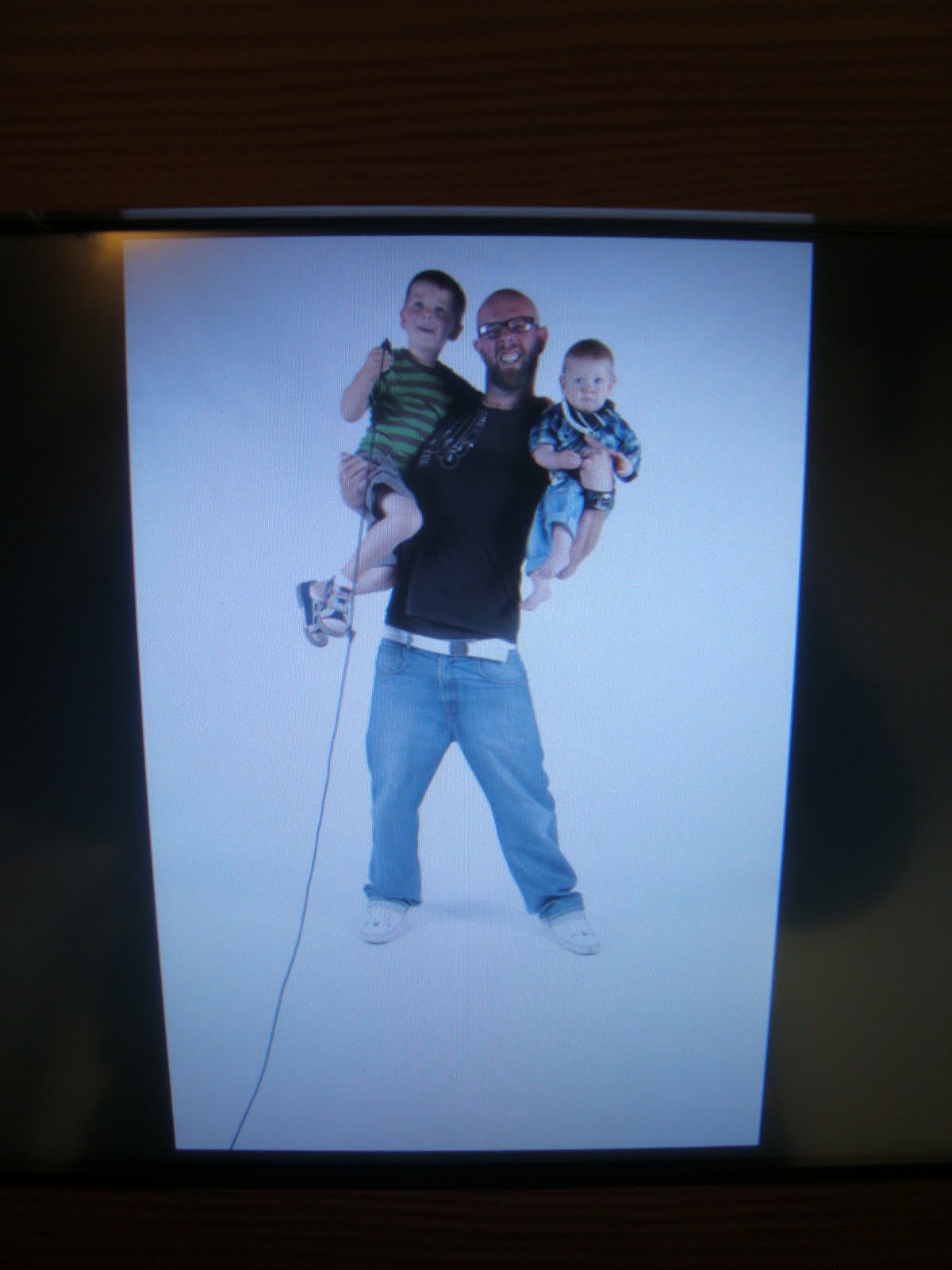
During our visit, I came across 'The Public Self Portrait Project'. Having explored the exhibition, I established that it relates to the theme of participatory art. The project began in June 2009 and to date has had over 5000 people participate. 

The project allows members of the general public to participate within the creation of their self portraits via a cable release from the digital photography equipment. This mechanism allows individuals to take control of how and when they want their photographs to be taken, therefore encourgaing the co-creation of the work.

Here are some of the pictures from the exhibition:


I really like these photographs. They capture a moment in time as well as recognising, celebrating, and promoting our diversity.

A great project, with an intention that allows the photographs to form an archive, which become more valuable over time as a record of who we are. I think that the intention of the project has contributed to its ongoing success, which has therefore encouraged the general public to actively participate. 

From this exhibition, I have come to recognise that the intention and purpose of participatory art needs to be clear. So this is something that I need to think about, consider, and develop in relation to my own practice and its success.  

Friday, 12 March 2010

Photo's from camera three

Yesterday at lunchtime I went back to check my camera to see if it was still there, and how many photograph's had been taken. I was really pleased because it was still there and all of the exposures had been used!

I've had the photo's developed and they have turned out really well!


I'm really pleased with the quality of the photo's. Considering they were taken using a disposable camera from the pound shop, they're not half bad at all! I like the way that the photo's are not pristine and untouched/manipulated in terms of finish. I think that this really adds to the concept and process of what I am doing and placing an onus on the public to co-create the work within a given context. Why should the images be manipulated to make them look of a better quality? Would this have ethical connotations? E.g. they are not my photographs so would it be acceptable for me to manipulate them and then claim them as my own?

Thank you to all those who participated! You have created brilliant responses to my experiment!  :-)

Would I get different responses documented on film if cameras were placed in different locations?

I think that the next step is for me to now to try and work out how I can develop the concept of participatory art further, and get the public thinking and exploring a question, or responding to a task

Thursday, 11 March 2010

Camera number three

So this morning, I put another camera out on a bench in the quad area at uni. 


I have been observing people's participation in both using and engaging with the camera from a distance. It has been really interesting so see that some people are really inquisitive and participate with my experiment by using the camera, others have a good look and then carry on with their business, some people didn't even notice the camera, whereas I have also observed some people will go up to the camera, and then choose not to participate. This is all really interesting stuff.


I have seen people use the camera on at least 4 occasions, so hopefully when I go back to collect it, there will be some great images captured on the camera! So thank you to all those who have participated so far! Thank you muchly! :-)

Photo's as promised

Here are the photo's from my first disposable camera as promised.

They have turned out really well so thank you to all those who participated! I really appreciate it! :-) 


Wednesday, 10 March 2010

Photo's

I haven't had chance to scan in the first set of photo's that were taken on my first disposable camera in the Hawkesbury Conservation Area as of yet. But I promise I will scan them in tomorrow and put them up! :-)

Camera number two

Yesterday, I was up at 6:40am and I went out to put my second camera out.

I attached the camera to a bench in the Hawkesbury Canal Junction area, which is a much more prominent and busier area than my first location. I was hoping that as a result of the location, more people would see and use the camera to respond to my experiement.


I went back later in the afternoon to find that the camera had been taken. I was mega disheartned and annoyed that somebody would do this in the first place. I always knew this would be a risk that I would have to take with this concept, but didn't think that anyone would actually do such a thing.

It was very frustrating to come to terms with the fact that any potential responses to my experiment that had been documented on the camera so far had been compromised. So I left with the hope that somebody may have taken the camera to another location as a part of the experiment, and that they would then bring it back. But they didn't.


So this got me thinking...

The concept that I am exploring and experimenting with is participatory art i.e. providing opportunities for the general public to be involved in co-creating art. So rather ironically and ambigously, did the person/people who removed the camera from its location/context aim to be critical by excluding others from art and documenting their artistic endeavours as a response to art and my intnetion? By removing the camera, did they in fact participate in the experiment by actually not participating at all? Does this mean just because a response wasn't documented on film, that the person/people who took that camera is/are not participating?

Now that I have reflected on the situation, I'm not as frustrated as I was because I have thought about why the camera may have been taken in the first place. As Donald Crawford (1991, p.24) states, "The appreciation of an art object usually goes beyond simply enjoying looking at it and involves coming to understand its meaning as well...Consequently what one sees would also involve an interpreation of what is seen - an explanation of the work's meaning. It may be based on what is readily seen in the work but often goes beyond that by making use of information about the artist's intention, and the social or cultural context of the work." At the end of the day, if a person has chosen to participate by removing/taking the camera, who am I to question/justify their actions? Surely art should be subjective, objective, and personally interpreted by the individual?

I am now considering leaving another camera on campus at uni with exactly the same intention as before (well for now anyway). But I am considering how to develop this concept of participatory art further by encouraging those who choose to participate in my art to consider a question or complete a task and then document this via the camera. But for now, I just want to get a wider response from people by encouraging them to use the camera to take photo's of anything they wish. Maybe I could see if any common themes/issues are identified from these photographs? I just hope this endeavour will get a more positive result, which will hopefully allow me to progress and extend my ideas in the contexts of both participatory and conceptual art.

References:
Crawford, D. (1991) Aesthetics and Arts Education. University of Illionois Press